
Smooth start at HEI Schools: a gentle journey for the first days of school
- Jan 27
- 4 min read
1. Why is the Initial Phase So Crucial?
The first days of school represent a significant milestone in a child's socio-emotional development. Moving from the familiar embrace of parents, a child enters a new world filled with teachers, peers, and entirely different routines. While this transition offers immense growth opportunities, it can also be a natural source of stress for a developing nervous system. During this pivotal period, the gentle and patient companionship of both parents and teachers is essential, helping the child feel secure, resilient, and ready to adapt positively to their first learning environment.
According to an international study by the University of Oslo (Norway) as part of the "Thrive by Three" project, researchers measured cortisol levels, a stress indicator hormone, in over 100 children aged 1–2 years during their transition into preschool.

The findings revealed:
Cortisol levels peak during the initial days of separation from parents.
It typically takes 4–6 weeks for these levels to stabilize, reflecting the process of physiological and emotional adaptation.
The presence and companionship of parents during the early stages significantly reduce the child's stress response.
In essence, Children require time and delicate support from adults to establish a sense of safety before they are ready to explore and learn.
2. Smooth Start: A Plan for a Seamless Transition
At HEI Schools Saigon Central, we implement the “Smooth Start” program, an orientation model built upon developmental psychology and scientific evidence regarding early childhood adaptation.
Program Objectives:
To facilitate a gentle transition from the home environment to school.
To cultivate secure relationships between the child, teacher, and parents.
To minimize physiological and emotional stress during the initial phase.
Implementation Principles:
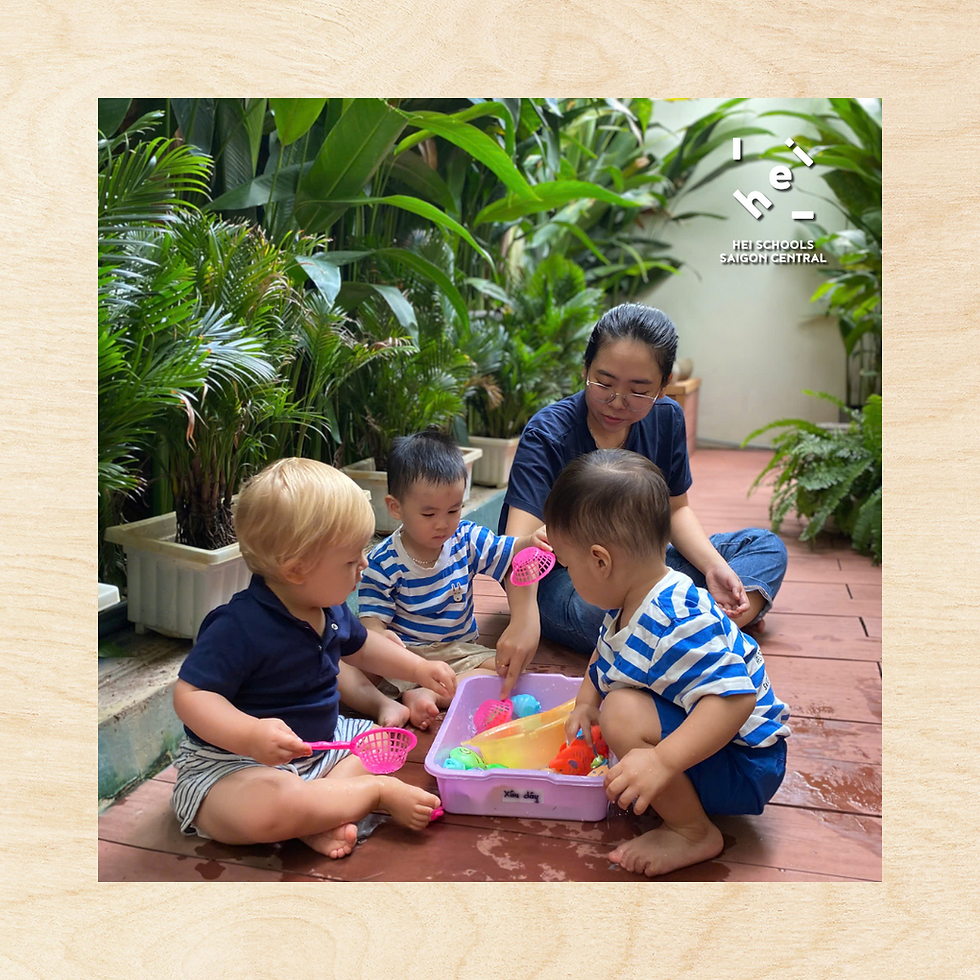
Accompaniment: In the early days, parents participate in classroom activities alongside their children.
Flexible Progression: The duration of the child's stay at school is gradually increased, tailored to each child's individual adaptability.
Open Communication: Teachers and parents engage in daily exchanges to provide updates on the child's progress.
Patience and Consistency: Both the school and the family maintain a gentle, steady rhythm to ensure the child feels secure.
3. The Role of Parents in the Smooth Start Journey

Parents are the primary and most vital "emotional safety zone" in a child's life. As children learn to step away from familiar arms into a new world, parental empathy and consistency make a profound difference.
Psychological Preparation at Home: Before school starts, talk to your child about the school, teachers, and new friends using a gentle, positive tone. Shared stories or role-playing school mornings help the child visualize the experience. Warm, simple reassurances help them understand that school is a normal and safe place.
Active Presence in the Early Days: Being present during initial classroom activities acts as a "bridge," allowing the child to feel secure as they gradually transfer their attachment from parent to teacher. Rather than over-intervening, parents simply need to be near, observe, and encourage. This calm presence signals that "everything is okay."
Encouragement and Acknowledgment: Small gestures like a nod of confidence or a warm smile act as an "emotional anchor," reinforcing the child’s inner security and confidence.
Maintaining a Calm Demeanor: Children are highly sensitive to adult emotions. If parents project anxiety, the child will likely mirror that fear. Staying calm and trusting in the child's ability to adapt, demonstrated through a simple wave and a smile, empowers the child to begin their learning journey with confidence.
4. The Role of Teachers in the Smooth Start Journey
Our teachers possess a deep understanding of child psychology and the professional skills necessary to support children during this formative period.
Observation and Emotional Responsiveness: Teachers are trained to identify subtle emotional cues from eye contact to gestures—to provide timely, gentle responses that ensure the child feels understood and safe.
Individualized Support Strategies: Recognizing that every child has a unique pace, teachers flexibly adjust their approach to allow each child to integrate in a way that suits them best.
Collaborative Communication with Parents: Maintaining a two-way information channel is key. Teachers proactively share observations and listen to feedback to align support strategies with the family.
In this phase, the teacher becomes the "secondary secure attachment, extending the child's sense of safety beyond the family. This relationship lays the foundation for emotional self-regulation, self-esteem, and social competence in the years to come.
5. From Research to Practice – When Science Meets Early Education
Findings from the "Thrive by Three" project and similar studies (Ahnert et al., 2017; Vermeer & Groeneveld, 2021) indicate:
A gradual transition involving both parents and teachers leads to superior adaptation.
Cortisol levels stabilize sooner when children form a secure bond with their school caregivers.
Children who undergo a "Smooth Start" exhibit more positive behaviors and engage in more proactive play after 4–6 weeks.
Thus, the Smooth Start program is more than an administrative process; it is a practical application of neuro-emotional development science in early childhood education.
🌼 Conclusion
Starting school can be an emotional journey, but with the understanding and partnership of parents and teachers, every child will learn to adapt, trust, and flourish at their own pace. Smooth Start serves as a soft bridge between home and school, a place where every small footstep is met with tenderness, patience, and love.
References
Ahnert, L., Gunnar, M., Lamb, M. E., & Barthel, M. (2017). Transition to child care: Cortisol and adjustment in young children. Child Development, 88(3), 841–854.
Vermeer, H. J., & Groeneveld, M. G. (2021). Children’s physiological stress reactivity and adaptation to childcare: A review. Early Childhood Research Quarterly, 56, 246–259.
Watamura, S. E., et al. (2019). Stress in toddlers starting daycare: Cortisol patterns and parental presence. Thrive by Three Project, University of Oslo.
Comments